

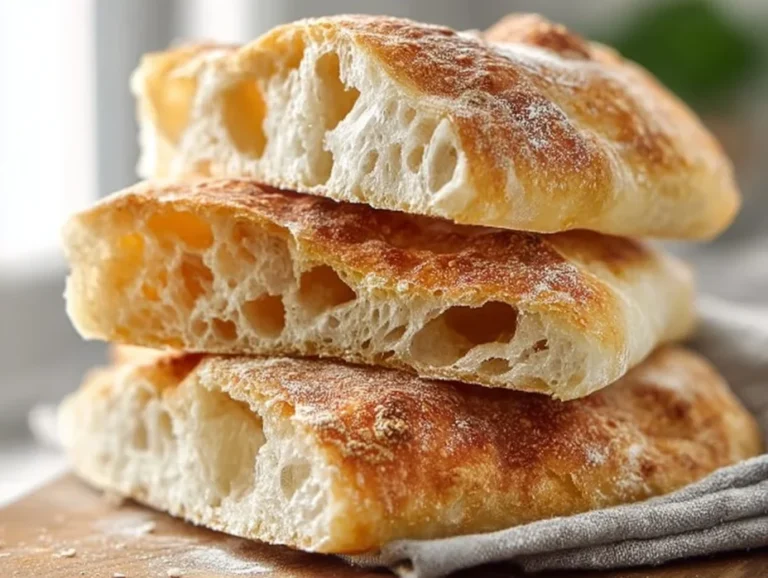
Ciabatta Bread is a delightful Italian loaf characterized by its chewy crust and airy texture. This rustic bread is made with just a few basic ingredients, including flour, water, yeast, and salt—creating a delicious, artisan-style bread that elevates any meal. Perfect for sandwiches or as a side for soups and salads, this recipe is simple enough for beginners and rewarding for seasoned bakers alike.
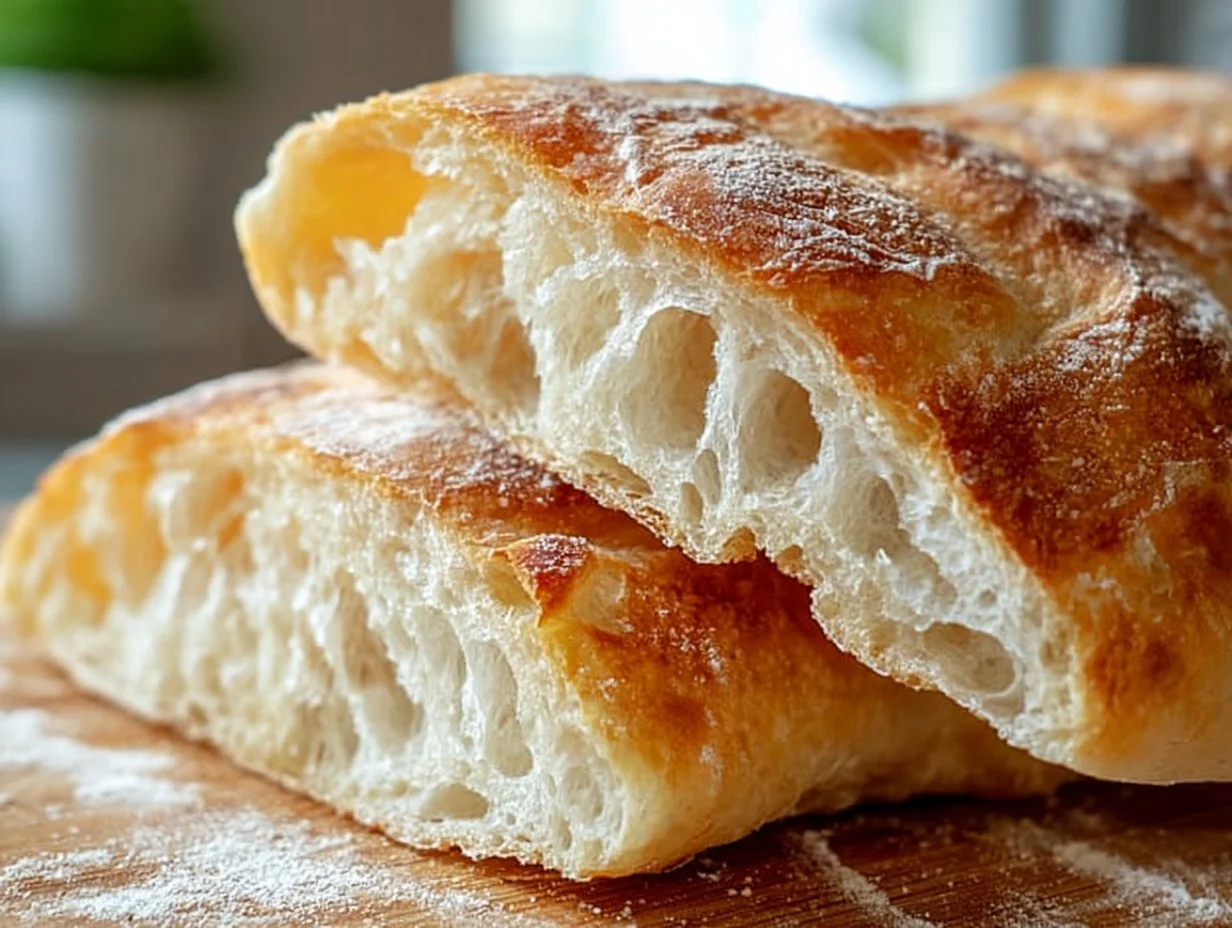
Table of Contents
Recipe at a Glance
| Best for | Sandwiches, sides, and appetizer bread |
| Difficulty | Moderate |
| Total time | Approximately 18-24 hours including rising time |
| Servings | 2 loaves |
| Key tip | Use a pizza stone for a crispier crust |
| Smart swap | Replace all-purpose flour with bread flour for more chew |
What are the key ingredients in Ciabatta Bread?
The main ingredients in Ciabatta Bread include all-purpose flour, water, active dry yeast, and salt. These simple components work together to create the bread’s unique flavor and texture; for example, bread flour can be used instead of all-purpose flour to enhance the chewiness of the loaf.
| Ingredient | Quantity |
|---|---|
| All-purpose flour | 4 cups |
| Water | 1 1/2 cups |
| Active dry yeast | 1 teaspoon |
| Salt | 2 teaspoons |
The flour acts as the structure of the bread while the water hydrates it, helping to develop gluten. Yeast is crucial for fermentation, creating air pockets that give Ciabatta its characteristic lightness. Salt not only enhances the flavor but also strengthens the gluten structure, resulting in a more chewy texture.
Equipment Needed
- Large mixing bowl
- Wooden spoon or spatula
- Plastic wrap
- Floured work surface
- Baking stone or baking sheet
- Wire rack for cooling
How do you make Ciabatta Bread?
Making Ciabatta Bread is a rewarding process that starts with a simple mixture and transforms into a delicious loaf over time.
Step 1: In a large bowl, combine the yeast with warm water and let it sit for about 5 minutes until it becomes foamy.
Step 2: Add the flour and salt to the yeast mixture and stir until a shaggy dough forms.
Step 3: Cover the bowl with plastic wrap and let it rise at room temperature for about 12-18 hours.
Step 4: After the dough has risen, flour a work surface and gently turn out the dough.
Step 5: Divide the dough into two pieces and shape them gently into loaves, being careful not to deflate them too much.
Step 6: Let the loaves rise for about 1-2 hours.
Step 7: Preheat the oven to 425°F (220°C) and place a baking stone or sheet inside to heat up.
Step 8: Once the loaves have risen, carefully transfer them to the hot baking stone or sheet.
Step 9: Bake for 25-30 minutes, until the loaves are golden brown and sound hollow when tapped.
Step 10: Let cool on a wire rack before slicing.
| Item | Value |
|---|---|
| Prep time | 15 minutes |
| Cook time | 30 minutes |
| Store time | 3 days at room temperature |
| Calories | 180 per slice |
| Protein | 6g |
| Carbohydrates | 36g |
| Fat | 1g |
Common Mistakes to Avoid + Pro Tips for Success
I have found making Ciabatta Bread to be a joyous process, but there are a few pitfalls to avoid to achieve that perfect loaf. With the right techniques and little adjustments, you’re bound to succeed.
Mistakes to Avoid
| Error | Explanation |
|---|---|
| Over-kneading the dough | This bread benefits from a more gentle handling; over-kneading can result in a dense crumb instead of the desired airy texture. |
| Not allowing enough rising time | The long fermentation is what gives Ciabatta its unique flavor and texture; rushing this process will yield a less flavorful bread. |
| Not using a hot baking surface | A well-heated baking stone or sheet is crucial for obtaining that signature crispy crust. |
Tips for Success
| Tip | Explanation |
|---|---|
| Use a bench scraper | This tool can help in handling sticky dough without deflating it while shaping the loaves. |
| Keep your workspace floured | Flour your work surface generously to prevent sticking and facilitate the shaping of the dough. |
| Test for doneness | When gently tapping on the crust produces a hollow sound, your bread is done and ready to enjoy! |
The single most important takeaway for Ciabatta Bread is to be patient and allow your dough to rise properly for the best results.
Why You Will Love This Recipe
Ciabatta Bread is one of my absolute favorites to make at home.
Artisanal Quality at Home
This bread, with its rustic crust and chewy interior, gives the feeling of artisanal baking right in your kitchen. It’s incredibly satisfying to enjoy a loaf that feels both simple to make yet refined.
Perfect for a Variety of Meals
Ciabatta is versatile; I love using it for sandwiches, serving it with soups, or simply enjoy it with olive oil and balsamic vinegar. The possibilities are endless, making it an excellent staple in any kitchen.
Family and Friends Will Be Impressed
Nothing quite feels like presenting a homemade loaf of Ciabatta to guests; the enticing aroma and beautiful crust create a wonderful atmosphere around the table. Plus, it’s a fun conversation starter!
Tips for the Best Texture
I’ve learned to incorporate steam in the oven by placing a pan of water at the bottom for the first few minutes of baking, which helps to create that perfect crust. Trust me, it’s a game changer.
Creative Serving, Variations, and Storage Ideas
When it comes to Ciabatta Bread, there are several ways to explore its versatility.
Unique Flavor Variations
Consider adding herbs like rosemary or thyme to the dough for a fragrant twist. You can also fold in sautéed garlic or sun-dried tomatoes to elevate the flavor, creating a bread that stands out at any meal.
Best Ways to Serve Ciabatta
This bread excels when served warm with a side of herb-infused olive oil for dipping. It’s also fantastic for making bruschetta or paninis, offering a delightful crunch and flavor contrast to fillings.
Storage Tips for Freshness
Store baked Ciabatta Bread in a paper bag at room temperature to maintain its crustiness. For longer storage, wrap it tightly in plastic and keep in the freezer, then refresh it in the oven when ready to eat.
| Idea | Best for | How to do it |
|---|---|---|
| Herb-Infused Ciabatta | Flavor enhancement | Mix herbs into the dough before the first rise. |
| Bruschetta Toppings | Appetizer or snack | Top slices with diced tomatoes, basil, and mozzarella. |
| Freezing Leftovers | Freshness maintenance | Wrap tightly in plastic and freeze to preserve taste. |
More Recipes You Can Try Next
If you enjoyed making Ciabatta Bread, you’ll love trying out more delicious recipes.
| Recipe Link | Why Try It Next |
|---|---|
| Homemade Bagels | Continue your bread-making journey by making chewy, delicious bagels! |
| Garlic Parmesan Dinner Galette | This savory galette complements any bread-lover’s meal. |
| Crispy Cheesy Garlic Parmesan Focaccia Bread | Try this flavorful, aromatic bread next for an awesome twist! |
Final Thoughts
Ciabatta Bread is a fulfilling recipe that lets you indulge in the art of bread-making with simple ingredients and techniques. Its texture, flavor, and versatility make it a must-try in your culinary endeavors. Each bite transports you to an Italian café, all from the comfort of your home.
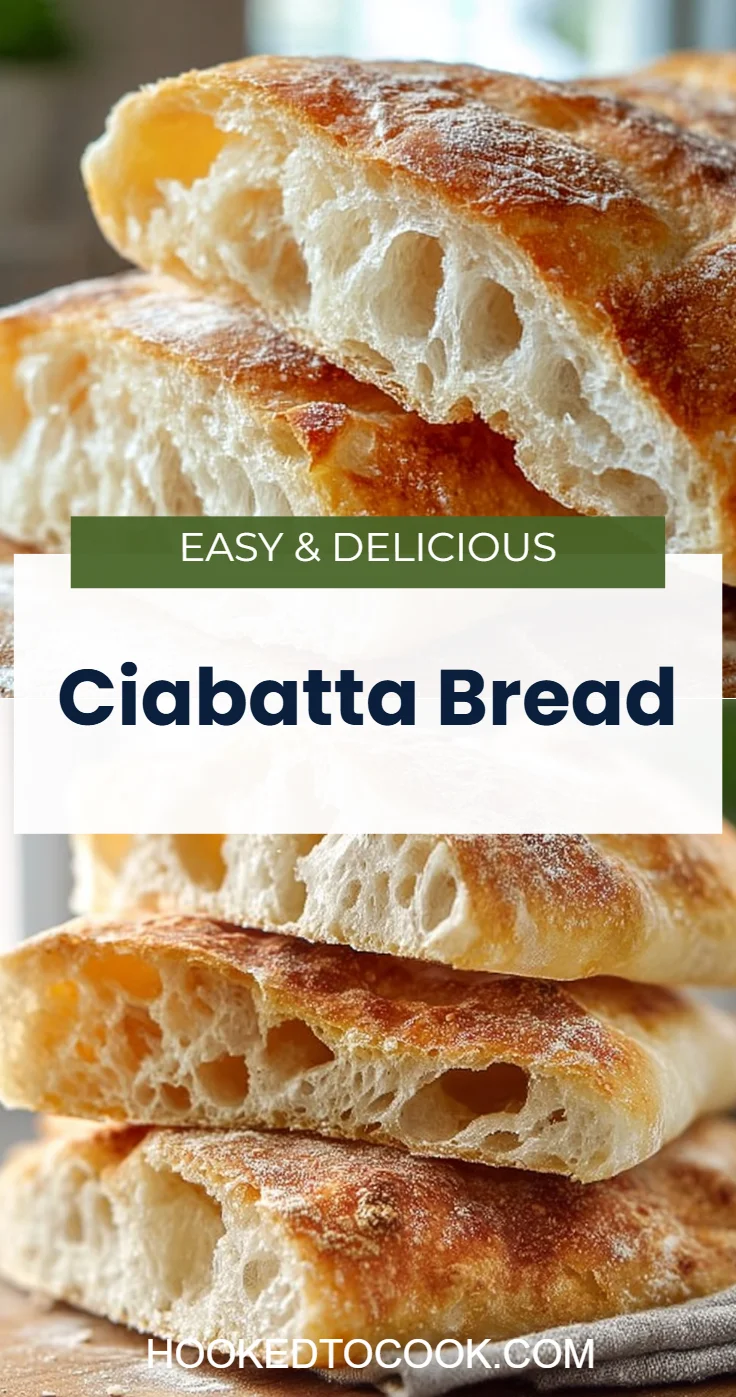
I truly encourage you to give this Ciabatta Bread recipe a try, as your kitchen will be filled with delightful aromas. Don’t forget to save it for later on Pinterest, so you won’t lose it amidst your other favorite recipes!
FAQ
Can I make Ciabatta without a stand mixer?
Yes, you can make Ciabatta bread without a stand mixer. It is easier if you have one, as it helps with mixing and kneading, but you can easily mix the ingredients by hand and finish the dough with gentle folding and stretching. This method can create the desirable structure without overworking the dough.
How do I know if my yeast is active?
To check if your yeast is active, combine it with warm water and a bit of sugar, letting it sit for about 5 minutes. If it becomes foamy or bubbly, your yeast is active and good to use.
Why did my Ciabatta not rise well?
A few factors can affect the rise of Ciabatta. Ensure your yeast is fresh, and your rising environment is warm and draft-free. Insufficient time to rise can also lead to disappointing results, so be patient!
Can I add flavors or ingredients to Ciabatta dough?
Absolutely! You can incorporate various flavors into your Ciabatta dough, such as herbs, olives, or cheese. Adjusting the ingredients can create unique variations while maintaining the basic structure.
What is the best temperature to bake Ciabatta bread?
The best temperature for baking Ciabatta Bread is around 425°F (220°C). This temperature helps achieve a crispy crust while ensuring the inside is properly baked. Using a baking stone can enhance the crust further.
Ciabatta Bread
A delightful Italian loaf with a chewy crust and airy texture, perfect for sandwiches or as a side for soups and salads.
- Total Time: 720 minutes
- Yield: 2 loaves 1x
Ingredients
- 4 cups all-purpose flour
- 1 1/2 cups water
- 1 teaspoon active dry yeast
- 2 teaspoons salt
Instructions
- In a large bowl, combine the yeast with warm water and let it sit for about 5 minutes until it becomes foamy.
- Add the flour and salt to the yeast mixture and stir until a shaggy dough forms.
- Cover the bowl with plastic wrap and let it rise at room temperature for about 12-18 hours.
- Flour a work surface and gently turn out the dough.
- Divide the dough into two pieces and shape them gently into loaves, careful not to deflate them too much.
- Let the loaves rise for about 1-2 hours.
- Preheat the oven to 425°F (220°C) and place a baking stone or sheet inside to heat up.
- Once the loaves have risen, carefully transfer them to the hot baking stone or sheet.
- Bake for 25-30 minutes, until the loaves are golden brown and sound hollow when tapped.
- Let cool on a wire rack before slicing.
Notes
Use a pizza stone for a crispier crust. Consider adding herbs like rosemary for a flavorful twist.
- Prep Time: 15 minutes
- Cook Time: 30 minutes
- Category: Bread
- Method: Baking
- Cuisine: Italian
- Diet: Vegetarian
Nutrition
- Serving Size: 1 slice
- Calories: 180
- Sugar: 0g
- Sodium: 460mg
- Fat: 1g
- Saturated Fat: 0g
- Unsaturated Fat: 1g
- Trans Fat: 0g
- Carbohydrates: 36g
- Fiber: 1g
- Protein: 6g
- Cholesterol: 0mg
No comment yet, add your voice below!